




Misted and failed rooflight replacement in Exeter

A misted rooflight has a failed seal and will not clear. We replace failed glass units and whole rooflights across Exeter and Devon, and finish the ceiling around them.

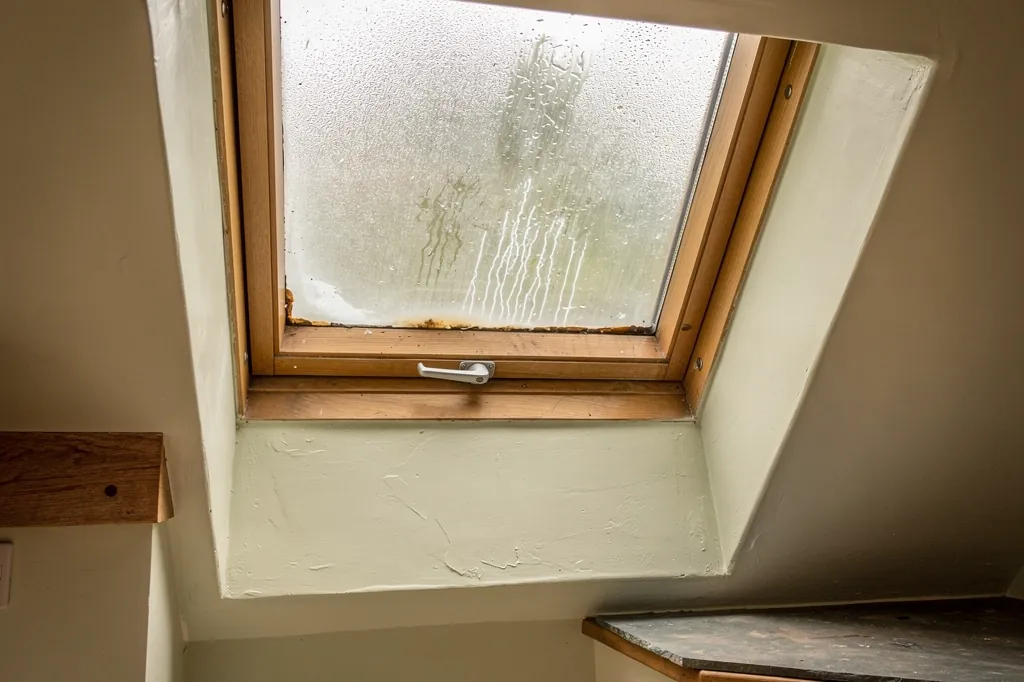
A misted double-glazed rooflight with condensation between the panes
  • 10-year workmanship guarantee
  • Building Control notification handled
  • Fitted to current Building Regulations
  • A finish schedule with every quote
  • Exeter and 30 miles around

At a glance

Typical fitting time
A short visit for glass, longer for a frame
Usually notifiable
Whole unit yes, glass unit only no
Suits
Rooflights with haze between the panes
Finish inside
Lining checked, plaster made good

The finishing notes

The full guide to misted and failed rooflight replacement

A misted rooflight is one where moisture has got between the two panes of its sealed glass unit and cannot get out again. It is a failed unit, and it will not clear: the seal around the edge has let go, and no amount of cleaning reaches the inside of the glass. The sensible way to replace a misted rooflight in Exeter or anywhere in Devon is to find out first whether only the glass has failed or the whole frame has, because that one answer decides the cost, the paperwork and how long the job takes.

When homeowners in Exeter ask us to replace misted rooflights, we start by working out whether the glass alone has failed or the frame too. We replace failed glass units and whole failed rooflights across Exeter and 30 miles around. We also finish the ceiling and lining around the new unit, because a replacement that leaves a chipped reveal and a patch of unpainted plaster has solved only half of what you can see from the room. Every quote comes with a written finish schedule that says what happens at the glass, at the frame and at the ceiling edge.

01The failed unit

What a misted or failed rooflight looks like

Haze between the panes means the edge seal has let go and the cavity is breathing.

A sealed glass unit is two or three panes held a few millimetres apart by a spacer bar, with the gap filled with dry air or an inert gas such as argon. The spacer holds a drying agent, a desiccant, that keeps the cavity dry. The whole sandwich is closed by a primary seal against the glass and a secondary seal around the outer edge. While that seal holds, the cavity stays clear for the life of the unit.

When it fails, the first sign is usually a faint haze in one corner or along one edge, often seen on a bright morning when the sun comes through at a low angle. Then a film of tiny droplets appears on the inside faces of the glass, and as the weeks pass the haze spreads. On a warm afternoon the droplets can vanish and the pane looks clear for a few hours. By the next cold night the moisture is back. That coming and going is the mark of a failed seal: the cavity is breathing, taking damp air in as the glass cools and pushing some out as it warms.

GlassStraight lining
  • Outer pane
  • Cavity of dry air or argon
  • Spacer bar with desiccant
  • Inner pane with low emissivity coating
  • Primary and secondary edge seals
Through a sealed glass unit

In heavier cases, mineral deposits dry out on the inner faces and leave a white or grey bloom, like limescale on a kettle, that stays when the droplets have gone. At that stage the unit is permanently cloudy. The glass is intact and still keeps the rain out. What has gone is its clarity and, more quietly, a good share of its insulation.

A rooflight can fail in other ways too, and it is worth separating them early. A cracked pane, a frame that has warped or corroded, a hinge that no longer holds, an opening mechanism that jams, and a covering of green or black growth over a flat rooflight dome are all signs that a unit has reached the end of its life. We cover those in our guide to the signs a rooflight needs replacing. This page concentrates on the commonest failure and the one people most often ask about: a misted unit.
Next note: Why the seal fails and the glass mists

A misted double-glazed rooflight with condensation between the panes
02Why it fails

Why the seal fails and the glass mists

Heat, standing water, sunlight and movement work on the seal harder than they do on a wall window.

Nothing in a sealed unit is permanent. The seals are polymer, and polymer ages. Rooflights are also among the hardest places for a glass unit to live, which is why they tend to mist before a window in the wall of the same house does.

What wears a rooflight seal
Heat
glass and frame run hotter than a wall window
Standing water
sits against the lower edge after rain
Ultraviolet
breaks down exposed sealant
Movement
frames and roofs flex every day
Age
polymer seals reach the end of their life
Heat
Roof glazing sits in direct sun for long stretches, and the glass and its frame can get far hotter than a wall window. The air in the cavity expands, the seal flexes, and the cycle repeats every day for years. A south or west facing rooflight over a kitchen or a dark roof surface works its seals hardest.
Standing water
A pane at a low pitch, or a flat rooflight, holds water along its lower edge after rain. Water sitting against a seal for hours at a time finds any weakness in it far sooner than water that runs off a vertical pane. In our guide to why rooflights mist between the panes we go through the mechanism step by step, from the first loss of adhesion to the visible haze.
Ultraviolet light
Sun breaks down exposed sealant over time, and the edge of a rooflight unit is more exposed than the edge of a window sunk into a deep reveal.
Movement
Frames expand and contract with temperature, and a roof moves with wind and with the house settling. Where a unit has been fitted a little tight in its frame, or packed unevenly, the glass edge is under load and the seal is stressed every day.
Manufacture and age
A unit with a poorly made edge can mist early. Others simply reach the end of a long life. Both look exactly the same from the room.

It is also worth knowing that misting is rarely the fault of anything you did. Cleaning, cold weather and a steamy bathroom do not cause it. They only make it easier to see once the seal has already gone.

Next note: Misted, or just condensation?

03Is it really misted?

Misted, or just condensation?

Where the moisture sits tells you whether the seal has failed or the glass is simply cold.

Before anything is ordered, check that the unit has really failed. Moisture on a rooflight is not always a failed seal, and the position of the moisture tells you which you have.

Where the moisture is

Room side

What it is
ordinary condensation
Wipes off?
yes
Action
ventilate the room

Weather side

What it is
dew on a cold clear night
Wipes off?
yes, or clears by itself
Action
none, the unit is working

Between the panes

What it is
a failed seal
Wipes off?
no
Action
replace the unit

If the haze wipes away, it was condensation.

On the room side of the glass
Droplets on the inside face of the inner pane are ordinary condensation. They come from humid room air meeting cold glass, and they are most common in bathrooms, kitchens and rooms with drying laundry. The unit is fine. Better ventilation, a trickle vent or an opening rooflight usually helps, and a modern unit with a warm-edge spacer and a coated inner face resists it better.
On the weather side of the outer pane
A film of dew on the outside of the roof glass on a clear, still night is the unit doing its job. The outer pane is so well insulated from the room that it falls colder than the air outside, and dew forms on it. It clears as the morning warms up. This is more likely with a good, energy efficient unit than with a poor one.
Between the panes
Moisture, haze or a bloom you cannot reach with a cloth, on the face of a pane you can see is inside the unit, is a failed seal. You can wipe both outer faces dry and it will still be there.

One quick test is to wipe the inner face of the glass with a dry cloth on a morning when the haze is showing. If the haze wipes away, it was condensation. If it stays exactly where it was, the moisture is inside the cavity. The test is simple, and it saves a good many people from replacing glass that did not need it.

If the answer is still unclear, our answer on whether misted rooflight glass can be cleared explains why the cloudiness between the panes will not shift, and what the alternatives to a new unit really amount to.

Next note: Glass unit only, or the whole rooflight?

04Glass or whole unit

Glass unit only, or the whole rooflight?

A sound frame can take new glass alone. A worn one means the whole rooflight comes out.

This is the decision that shapes the job. A failed seal is a failure of the glass unit, and the unit can often be replaced on its own, leaving the frame and the surrounding roof untouched. Or the frame itself may be tired, in which case the whole rooflight comes out and a new one goes in.

Replacing only the sealed glass unit has real advantages. The roof covering and flashings around the frame stay in place, the ceiling lining inside is not disturbed, and the work is quick. It also falls outside the Building Control notification that a full replacement needs, which we explain in the planning chapter below. The fuller account is in our guide to replacing just the glass in a rooflight.

It only makes sense when the frame is sound and can take a new unit.

It only makes sense when the frame is sound and can take a new unit. These are the things we look at on the survey.

The frame's condition
Timber frames must be dry, solid and free of rot where the glass sits. Aluminium and uPVC frames must be square, free of cracked welds or corroded joints, and have beading that can be removed and refitted cleanly.
The age and make of the rooflight
Older frames may be built for a thicker or thinner unit than current ones, or to a pattern the manufacturer no longer supports. A glass unit can be made to almost any size, but the frame has to be able to hold it correctly.
How the glass is fixed
Some rooflights have glass held by external beads or clips, which allow it to be changed from outside. Others have the glass bonded into the frame, so the sash has to be replaced as a whole.
Everything else about the unit
A frame whose opening gear has seized, whose seals have gone hard, or that lets in draughts is a better candidate for full replacement, because a new glass unit in a worn frame will mist again for the same reasons, and the rest of the unit will still be tired.

The comparison below shows how the two routes differ in practice.

QuestionNew glass unit onlyWhole rooflight
What comes outThe sealed glass unitGlass, frame and often the flashings
Ceiling liningNormally untouchedOften disturbed and made good
Building ControlNot notifiableNotifiable, and must meet Part L
Best whenThe frame is sound and fixed for easy glass changeThe frame is worn, rotted, out of date or does not suit the new glass
On the dayShort visit, little messLonger, with roof and ceiling work

Next note: What a failed unit costs you in comfort

05What it costs you

What a failed unit costs you in comfort

A misted unit lets heat out and a good deal of daylight stay out, though it is not a danger.

Misting looks like a cosmetic problem, but a failed unit is also a thermal one. Once the seal has gone, the cavity that was meant to hold still air or gas now holds damp air that moves. The gas fill, if there was one, has largely gone, and the low emissivity coating on the inner face, which reflects heat back into the room, can degrade in contact with moisture. The result is a unit that loses more heat than it should and feels colder to stand under.

You may notice it as cold air falling from the ceiling on a winter evening, as a rooflight that mists on the room side more readily than it used to, or as a bedroom that is harder to heat in a loft conversion. Our answer on whether a misted rooflight loses heat goes into the loss, and our page on energy efficient rooflights covers choosing a better unit this time.

  • A colder feel under the glass in winter
  • More condensation on the room side
  • A duller, milkier room
  • Gas fill and coating no longer working

A misted rooflight is not a danger to the people under it.

A misted rooflight is not a danger to the people under it. The glass is as strong as it was, and the moisture sits in a closed gap. Our answer on whether a misted rooflight is dangerous sets out the one situation where it deserves attention sooner: a cracked pane, which is a different fault from a misted one and is covered under the signs of failure.

There is one more cost, and it is the plainest. A rooflight that is meant to bring light into a room, now a milky panel with a bloom on it, brings in less of it, and what it brings is dull. The room often looks noticeably brighter once the new unit is in, because the dullness had crept up slowly.

Next note: The survey: measuring a unit that is already in the roof

An old roof window with a misted pane
06The survey

The survey: measuring a unit that is already in the roof

New glass is made to fit what is already in the roof, so the quote follows a visit.

Replacing a failed unit begins with a visit, because the new glass has to be made to fit what is actually there. That is different from fitting a brand new rooflight in a new opening, and it is the reason the quote follows a visit.

We measure the visible glass, the rebate depth in the frame, the thickness of the existing unit and the position of the beads or clips. We look at the frame for rot, corrosion and movement, at the flashings and the roof covering where they meet it, and at the lining and ceiling inside. We note the make and model of the rooflight if it can be identified, which sometimes comes from a label on the frame or the edge of the unit.

  1. Measure the glass and rebatesize, depth and unit thickness
  2. Inspect the framerot, corrosion and movement
  3. Check the roof and ceilingflashings, covering and lining
  4. Write the schedulewhat is made good inside

Photographs help before we visit. A few of the whole room, one of the rooflight from below, and one of the roof from outside if you can safely take it, let us arrive with the right questions. Where a manufacturer still makes the original unit, we can often order a direct match. Where it does not, a unit made to the measured size works equally well, provided the frame can hold it.

We also check whether the replacement will fit the opening you already have. Usually a new unit goes in the same place and at the same size, but some old rooflights have been fitted in an opening that is not square, or have been altered over the years. Our answer on whether a new rooflight will fit the old opening goes through the cases where an opening needs adjustment before a new unit sits properly.

The survey is also where we agree what happens inside. If the lining is sound and clean, we protect it. If the plaster around the opening has cracked, stained or been patched by someone else, we record it on the finish schedule and agree whether to make it good in the same visit.

Next note: Choosing the new glass

07The new glass

Choosing the new glass

A replacement is a chance to improve the unit, not only to copy it.

A replacement is a chance to improve the unit, not only to copy it. Glass has moved on, and a unit made today will usually outperform one from a few decades ago, even in an old frame. The choices are these.

Choices for the new unit
Glazing
double, or triple if the rebate allows
Coating
low emissivity on an inner face
Spacer
warm-edge, not bare metal
Inner pane
laminated overhead
Extras
solar control, self-cleaning, acoustic
Double or triple glazing
Most replacement units are double glazed. A triple unit is thicker and heavier, and it only suits a frame with a deep enough rebate. Where a frame cannot take triple glazing, a good double unit with a low emissivity coating and argon is usually the better choice than forcing the fit.
Low emissivity coating
A thin, invisible metal oxide coating on one of the inner faces reflects heat back into the room. It is the single largest improvement over an uncoated old unit.
Warm-edge spacer
The spacer bar at the glass edge is where an old unit loses most heat and where condensation starts. A warm-edge spacer in a composite or plastic material cuts the cold bridge and keeps the edge of the inner pane warmer.
A laminated inner pane
Overhead, a laminated inner pane is good practice and industry guidance, because laminated glass holds together if it breaks. It is not a requirement of Part K, which deals with glazing in doors, beside them and at low level, but it is a sensible choice where people sit or walk beneath the glass.
Solar control and self-cleaning coatings
A south or west facing rooflight over a kitchen can overheat in summer. A solar control coating cuts the heat that comes in, at a small cost to winter warmth and a slight tint. A self-cleaning coating helps rain wash a low pitched pane, though it does not remove the need for an occasional wash.
Acoustic glass
A thicker or laminated outer pane damps rain noise, and it can be chosen as an option where a loft bedroom sits right under the roof.

If your frame is going too, the choices widen to the rooflight itself. Our pages on roof windows, VELUX windows, flat roof rooflights and electric opening rooflights cover what is available. A failed opening mechanism is often a good moment to move to an electric or a better manual one, since the sash is coming out anyway.

Next note: Planning permission and Building Regulations when you replace

08Rules

Planning permission and Building Regulations when you replace

Glass alone is not notifiable. A whole replacement is, and we handle the notification.

Replacing a rooflight like for like is not the same as adding a new one, and the rules differ for the two routes described above.

  • 150mmthe furthest a rooflight may project beyond the roof plane under permitted development
  • 1.7mthe height above the floor above which a side-facing opening part need not be fixed shut

Replacing only the sealed glass unit in an existing frame is not notifiable.

Planning
Rooflights on a house are usually permitted development under Class C of Part 1 of Schedule 2 to the General Permitted Development Order. The conditions are that the unit projects no more than 150mm beyond the plane of the roof and sits no higher than the highest part of the roof. Side-facing units must be obscure glazed and non-opening unless the opening part is more than 1.7m above the floor. A like for like replacement usually stays within what is already there, but a new unit that stands higher on its kerb is a case where the 150mm limit has to be checked.
Building Regulations
Replacing only the sealed glass unit in an existing frame is not notifiable. Replacing the whole rooflight or roof window, frame and glass, is. A window counts as a controlled fitting, so the new one has to meet Part L, the rules on conservation of fuel and power, and the work has to be notified to Building Control, or self-certified by an installer registered with a competent person scheme. The limiting U-values are set out in Approved Document L, Volume 1 (2021 edition), and we specify the new unit to meet them.

We handle the Building Control notification where the work is notifiable, so you do not have to chase it. If the replacement involves trimming a rafter to alter the opening, that is a structural alteration and needs approval in its own right. You can read the national position on the Planning Portal and on GOV.UK.

Where the rooflight is an escape window from a loft room, Part B applies as well, and a replacement has to keep the same clear opening. We check this at survey, because a smaller sash would quietly remove a way out of the room.

Next note: The replacement day, and what the ceiling needs

A clear new rooflight after replacement
09The day and the ceiling

The replacement day, and what the ceiling needs

The room is protected first, then the unit changes, then the lining and plaster are made good.

A glass-only replacement is usually a short visit. The sash or beads are opened, the failed unit is lifted out, the frame's rebate is cleaned and checked, and the new unit goes in on fresh setting blocks and glazing gaskets. The beads or clips are refitted and the weather seal tested. The old unit is taken away with the rest of the debris.

Replacing the whole rooflight is a bigger job. The covering and flashings are lifted around the frame, the old unit is released and removed, the new one is fitted on its kerb or upstand, and the flashings or flat roof covering are dressed back to it. The lining is checked, adjusted where the new frame needs it, and finished. Because the roof is opened, the work is planned around the weather, which is why many people ask us whether replacement can happen in winter. We answer that in can you replace a rooflight in winter, and give the practical side of timing in how long it takes to replace a rooflight.

Finish schedule: a replacement
Protection
floor sheeted, doorway sealed
Lining
formed back to a clean edge
Plaster
gypsum, or lime in old houses
Edge
ready to paint, or painted
Dust
managed and the room left clean

In a cob or stone cottage, the lime plaster needs lime to be made good, because gypsum does not bond to it well and will crack away from it.

The inside is where a replacement can look careless. Old rooflights are often found with a lining that has been painted over several times, a plaster edge that has chipped where the old frame was removed, and a crack running from the corner of the opening into the ceiling. Where the rooflight sits in a lath and plaster ceiling, which is common in Georgian and Victorian houses in St Leonards, Southernhay and Topsham, the plaster is held on timber laths with a few millimetres of key behind it, and careless work can shake a whole section loose. In a cob or stone cottage, the lime plaster needs lime to be made good, because gypsum does not bond to it well and will crack away from it.

For those reasons we sheet the floor, seal the doorway to the rest of the house and protect the ceiling around the opening before we start. We form the lining back to a clean edge, make good with the right plaster for the ceiling and leave the opening ready to paint, or painted where the schedule says so. Our guide to replacing a rooflight without damaging the ceiling goes through the order of work. Dust is managed and the room is left clean.

We have more on how we finish an opening in our guide to how a rooflight is finished inside.

Next note: What sets the price of replacing a failed unit

10The price

What sets the price of replacing a failed unit

Glass only or whole unit sets most of it, then size, access, the frame and the inside.

Prices come from a survey, not this page, because the same word, "misted", covers jobs that are very different in size. The price follows a short list of things, and understanding them helps you compare quotes honestly. For general market ranges for the different rooflight types, see our costs guide. Your own figure comes from a survey.

A replacement unit in a sound frame costs far less than a new rooflight, a new kerb, new flashings and the work around them.

Glass only or whole unit
This is the biggest single driver. A replacement unit in a sound frame costs far less than a new rooflight, a new kerb, new flashings and the work around them.
Size and specification
A larger unit costs more to make and handle. Triple glazing, solar control, laminated glass and acoustic glass add to the price of the pane. A specialist unit with a curve, an unusual shape or tinted glass is dearer than a standard rectangle.
Access
A rooflight on a single storey extension, reached with a ladder, is quicker and cheaper to work on than one three storeys up on a terrace, which may need scaffolding. A heavy unit may also need extra hands or a lifting aid.
The state of the frame and the roof around it
A rotted timber frame, a worn flat roof covering or a corroded flashing found on the day all change the job. We look for these at survey so that the quote already covers them.
The inside
A clean reveal that only needs a repaint is a small item. A cracked lath and plaster edge or a damaged lining takes more time. The finish schedule shows what is included.

Replacement is also covered by a 10-year workmanship guarantee on our work, which is part of the quote, not an extra. Manufacturer defects in the glass itself fall under the manufacturer's own warranty, which we help you claim.

Next note: Questions about misted and failed rooflights

11Questions

Questions about misted and failed rooflights

Short answers to what people ask before booking a survey.

Can I just leave a misted rooflight?

A new unit is made with fresh seals and a new desiccant, and a good one lasts for many years.

You can, for a while. It still keeps the weather out, and a misted unit is not dangerous. But it will not clear, it will usually get worse, and it loses more heat than a sound unit. If the room is a kitchen, a bedroom or a landing you use daily, most people find the cloudiness bothers them within a season or two.

Will a new glass unit mist again?

A new unit is made with fresh seals and a new desiccant, and a good one lasts for many years. It will not mist again for the reasons it failed the first time unless the frame is still putting stress on the glass. That is why we check the frame and the fit at survey and only recommend glass alone where it is sound.

Can you match my existing rooflight?

Often, yes. Where the original maker still supplies the unit, we can order it by model and size. Where not, we measure and have a unit made to fit. We tell you at survey which route applies, and whether the frame can hold the specification you want.

Do I need to be at home?

For the survey and on the day, someone needs to give us access to the room under the rooflight and, for roof work, to the roof. You do not need to stay in the room. We protect the floor and furniture, keep the dust to the work area and leave the room clean.

How do I start?

Use the form on this page, send photos on WhatsApp or email us at info@brightviewskylightsexeter.co.uk. A few photos of the rooflight from below and a note of what you see between the panes are enough to begin. We then arrange a survey, measure the unit and send a written quote with the finish schedule. You can ask for a quote here.

If you are still deciding between a new unit and a fuller upgrade, our pages on conservation rooflights and walk-on rooflights show where a replacement can also change the type of rooflight in the same opening.

Get a quote

Tell us about the room

  • No obligation
  • Finish schedule included
  • 10-year guarantee
CallGet a quote